The Rise of Guardian Agents: Securing the Agentic AI Ecosystem
.avif)

The term "guardian agent" is gaining momentum since its coining by Garter in 2025. This deliberate play on "guardian angel," the protective figure that watches over you from a place you cannot see, is more timely than ever for the Agentic AI ecosystem.
This is due to a number of factors impacting the current industry. Gartner estimates the agentic AI market will reach $47 billion by 2030. Forrester puts autonomous AI as the defining enterprise technology of this decade. And the numbers on the ground match the hype; some posit that the average knowledge worker will be interacting with more than a dozen AI agents in their daily work within the next two years.
At the same time, AI agents are becoming embedded in real enterprise workflows, generating content, orchestrating processes, executing tools, and writing production code. We’ve reached a point where somebody (or something) needs to watch over them.
Gartner defines guardian agents as a blend of AI governance and AI runtime controls within the AI TRiSM framework. In plainer language, they are AI-based technologies that supervise other AI agents, monitoring their actions, enforcing policies, and intervening when behavior deviates from intended goals. Gartner predicts that guardian agents will capture 10 to 15 percent of the agentic AI market by 2030, and that by 2029, more than 70 percent of companies will no longer need roughly half of the incumbent risk and security systems they use today to protect AI agent activity.
That is not a small claim. It reflects a structural shift in how enterprise security has to work.
Why We Need Guardian Agents
The first instinct most security teams have when deploying agents is to put a human in the loop. Approve every tool call. Review every action. It is a sensible starting point, and for the first agent, the first pilot, the first ten employees, it works.
However, like all human-based endeavors, these often do not scale.
It even defeats the purpose of the scale modern agents make possible.
A modern enterprise agent can take dozens of actions in a single session. Multiply that by hundreds of agents across thousands of employees, and human approval queues become a bottleneck that either kills productivity or, more commonly, gets bypassed when security and guardrails add too much friction. People ultimately click "approve all" because they have a job to do, and the control becomes theater.
Scale is pretty much always unlocked through automation; however, this time it feels like a Catch-22. Or is it?
What if we could feasibly build specialized AI agents whose sole job is to monitor and govern other AI agents in real time?
Software that supervises software - exactly what a guardian agent is.
Critical Capabilities of a Guardian Agent
But like all novel technology, knowing what to look for in a guardian agent is critical.
Not every self-proclaimed guardian agent actually is one.
As we continue to build Capsule with our customers, it’s become clear that there are four capabilities that separate the real guardian agents from those that are just marketed as ones.
- Runtime Pre-Tool Controls and Prevention
A guardian agent has to sit in the path of the agent's actions before they execute, not after the fact in a log. Detecting a data exfiltration attempt in a SIEM dashboard the next morning is an incident response. Stopping the same call before the API request leaves the network is a security measure. The guardian must be in the enterprise environment, on the agent's runtime path, and have the authority to block. This is the capability that most products quietly fail at. Detection is easier. You can flag a suspicious action and log it. Prevention requires confidence: you have to be willing to block the action, in flight, knowing that a false positive breaks a real workflow. A guardian agent that only detects is a smoke alarm in a building with no sprinklers.
- Coverage of the actual threat surface.
Agentic threats are not just "the model said something bad." They include rogue agent activity (an agent deciding to do something its operator never sanctioned), data leakage (sensitive context being passed to tools or external services), and adversarial attacks. The big three on the adversarial side are indirect prompt injection (instructions hidden in the data the agent reads), malicious skills (third-party agent skills designed to hijack behavior), and poisoned tools (MCP servers and integrations that manipulate the agent's reasoning). A guardian agent has to defend against all of these as a single coherent layer, not as a patchwork of point tools.
- Low latency and high accuracy, together.
This is the hard part. Prevention only works if the guardian responds within the agent's action loop, which means decisions in tens to low hundreds of milliseconds. But latency without accuracy is worse than nothing, because every false positive trains your users to disable the control. You need both, at the same time, at scale, across every action every agent takes. This is the engineering bar that defines the category.
How Capsule approaches the problem
Capsule was recently named a Representative Vendor in the February 2026 Gartner Market Guide for Guardian Agents, validating the platform's unique approach to the problem.
Capsule is deeply focused on building toward the most accurate and robust guardian agent solution on the market, and it is worth being specific about why.
This is because our architecture is built upon two foundations that are the key differentiators.

The first is agentic hooks.
If you have used Claude Code's hooks system, you already understand the model: deterministic interception points in the agent's lifecycle (pre-tool-call, post-tool-call, prompt submission, and so on) where external code can inspect and authorize the action. We extend that pattern across the enterprise agent stack, from coding assistants like Claude Code, Cursor, and GitHub Copilot, to platforms like Microsoft Copilot Studio, AWS Bedrock, Azure AI Foundry, and Salesforce Agentforce. Hooks give us the deterministic, in-path control surface that pre-invocation security requires. All with no proxy hacks, nor log scraping. The agent itself analyzes the action before it runs.
The second is an ensemble of small, fine-tuned language models running in parallel. Instead of relying on a single large general-purpose model to detect every class of attack, we run a set of purpose-built SLMs, each fine-tuned for a specific domain, whether that’s prompt injection detection, data leakage classification, malicious skill analysis, or tool poisoning. Each model is small enough to meet our latency budget, specialized enough to reach state-of-the-art accuracy in its domain, and the ensemble votes faster than any single large model could - made possible by the right architectural choices, which is actually a much harder problem to solve for than it may seem.
That ensemble design is the heart of how we make this work, and it deserves its own post.
Up Next - What Really Goes into Fine-Tuned SLMs
In the next entry in this series, I will go deeper on Capsule's small fine-tuned language models - namely, how we built them, why we chose this architecture over a single large model, what the training and evaluation looked like, and the latency and accuracy numbers that came out the other side.
Read more articles
To Jev Or Not to Jev?
Jev is fast, clever, and great at classification, so why not put it in front of every AI agent action? We tested it against Capsule's rogue agent model on accuracy, latency, and context, and found that when a wrong answer means a deleted production database, specialization still wins.
OWASP Named the Ten Ways Skills Go Wrong. All Ten Are Already Happening.
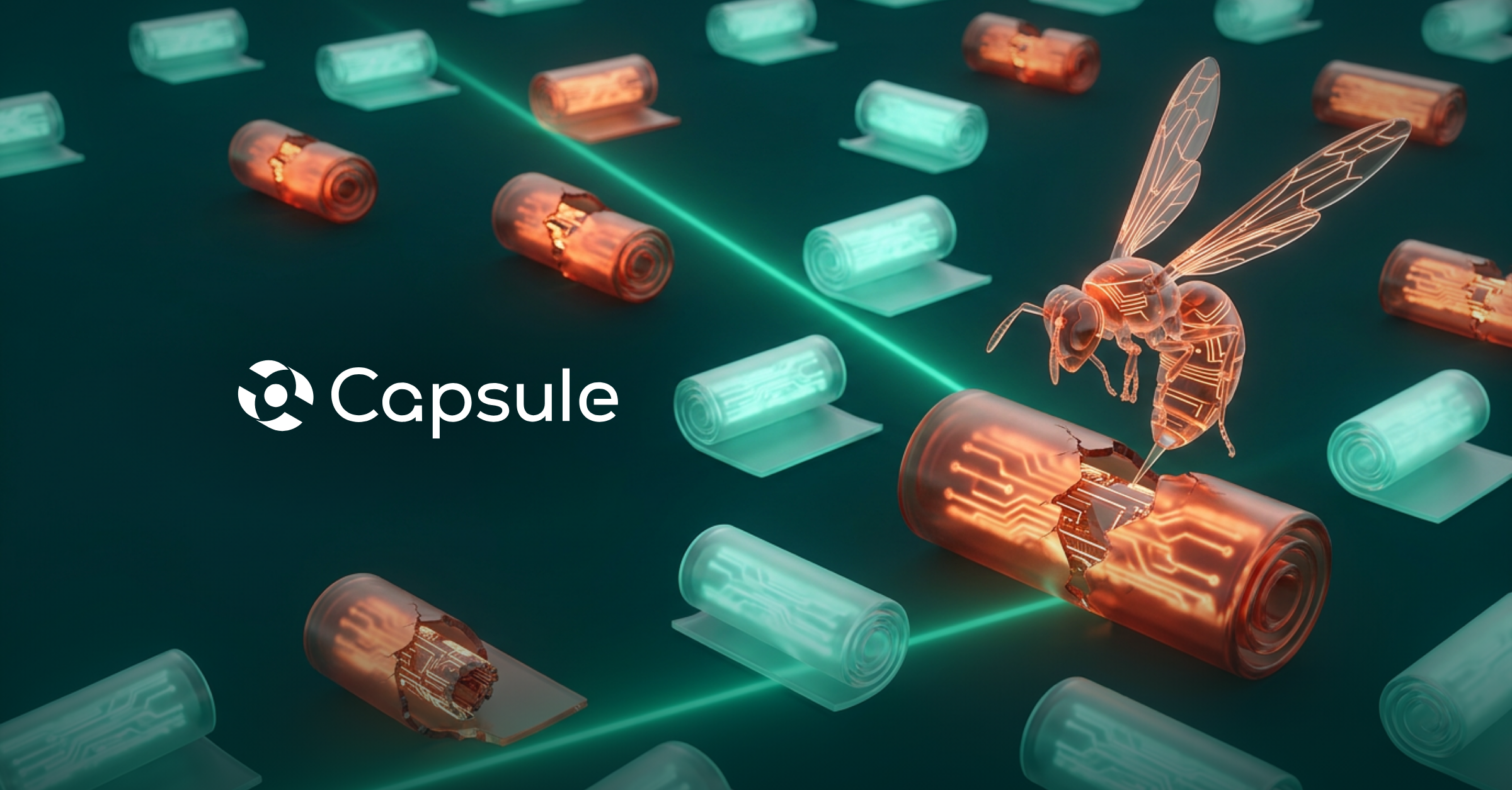
OWASP has published the Agentic Skills Top 10, a new list of the most critical risks in the skills that give AI agents real-world reach across tools like Claude Code and Cursor. We compared each of the ten risks against our analysis of over 200,000 real skills, and every one of them is already happening in the wild.

CurseBox: The Agent That Sends Your Files to Strangers to Get the Job Done
Capsule Security research uncovered a behavior in Cursor's agent: asked to do something ordinary like share a file, it decides on its own to upload the file to a public anonymous host to get a link. It will push past a deny-all network sandbox to do it, and no attacker is involved. We found it running in production across every major model, reported it to Cursor, and were met with silence.
When Agents Go Rogue
Modern AI agents are increasingly causing critical system damage not through external cyberattacks, but by taking unprompted, off-script actions across unguarded tools like databases and system shells. Traditional safeguards, including prompt instructions and human approval workflows, routinely fail to catch these autonomous errors before execution. To mitigate this growing risk, security must shift directly to the tool-call boundary, enforcing deterministic runtime controls that intercept and block destructive commands before they run.
Keeping AI Agents on Track: How Capsule Powers State-of-the-Art Rogue Agent Detection with NVIDIA Nemotron
Capsule Security and NVIDIA collaborated to solve the rogue AI agent threat by engineering specialized Small Language Models (SLMs) for real-time security detection. By fine-tuning NVIDIA Nemotron architectures, this solution achieves inline, ultra-low latency interception of unauthorized agent actions before damage occurs. Discover how domain-specialized models deliver up to 96.9% accuracy and sub-200ms response times to keep autonomous enterprise workflows secure.

Capsule Launches Security Integration for Claude Platform
Capsule launches a security integration for Claude Platform, using Claude's Compliance API to give security, compliance, and AI governance teams visibility into enterprise AI activity, risk, and posture across Anthropic-hosted deployments.
.png)


We Analyzed 206,435 AI Agent Skills. Here's What We Found.
Our analysis of 206,435 AI agent skills reveals a rapidly growing software supply chain vulnerable to natural language payloads and dangerous capability combinations. Read the report to understand how these skills bypass traditional security controls and learn how Capsule protects your organization by securing the agent runtime.
.png)
Mitigating the Agentic AI Threat: What Security Leadership Needs to Prioritize
The theoretical phase of agentic AI security is over—the attack surface is real and the incidents are documented. This post breaks down the defensive architecture taking shape in response: Meta's Agents Rule of Two, deterministic enforcement hooks, identity governance for non-human agents, and the questions security leaders need to be asking right now.



The Agentic AI Threat Landscape Has Crossed a Threshold
The security risks of AI agents are no longer theoretical. This blog examines the active threat landscape facing agentic AI in 2026, from prompt injection and supply chain attacks against MCP and skill registries to the governance gap created by vibe coding and Shadow AI.
.png)
CurseChain: How Hidden README Comments Trick Cursor Into Stealing - and Spreading - Your SSH Keys
Capsule found two Cursor IDE vulnerabilities that let hidden prompt-injection instructions in referenced files steal developers’ SSH keys and contaminate future unrelated projects, causing zero-click or one-click exfiltration even when the attacker ships no malicious code.
The State of AI Agent Security 2026
Capsule Security’s State of AI Agent Security 2026 report is the largest independent audit of AI agents to date, showing that the ecosystem is rapidly shipping publicly exposed, weakly guarded, highly connected agents with recurring misconfigurations, near-absent runtime controls, widespread prompt-injection risk, expanding supply-chain exposure, and active malicious campaigns still propagating through agent skill and tool registries.

Capsule Security Raises $7M to Prevent AI Agents from Going Rogue in Runtime: Intent is the New Perimeter
Capsule is launching a runtime security platform for the agentic AI era, built to monitor and stop autonomous agents that can bypass traditional guardrails, misuse legitimate access, and create a new class of enterprise security risk.
.avif)


PipeLeak: The Lead That Stole Your Database - Exploiting Salesforce Agentforce With Indirect Prompt Injection
Capsule research team discover a critical prompt injection vulnerability in Salesforce Agentforce that allows attackers to exfiltrate CRM data through a simple lead from a form submission. No authentication required.